Integrating the Ornament Floral Pattern into Professional Design Workflows
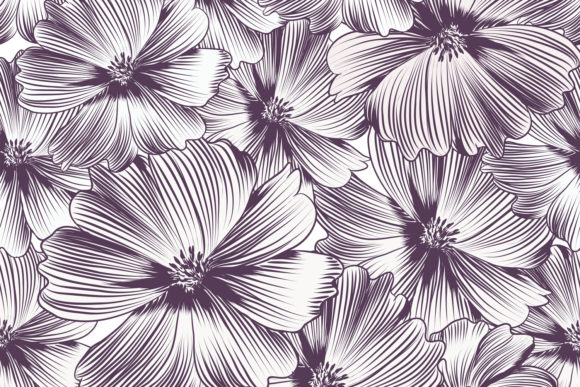
The Ornament Floral Pattern serves as a foundational visual asset for designers, marketers, and creators seeking to establish a cohesive aesthetic across multiple mediums. Unlike standalone illustrations that function as focal points, this floral ornament seamless pattern is engineered for repetition and scalability. It operates as a texture or background element that unifies disparate design components without competing with primary content. In professional workflows, selecting the right pattern is less about personal preference and more about functional utility. This specific 4-color design offers a balanced palette that provides enough visual interest to prevent flatness while maintaining sufficient contrast to ensure text legibility and brand consistency.
Understanding where this asset fits within the broader production pipeline is essential for efficiency. The Ornament Floral Pattern is not merely a decorative afterthought; it is a strategic tool used during the planning, execution, and refinement phases of creative projects. Whether you are developing wedding stationery, configuring website graphics, or designing fabric prints, the seamless nature of this file eliminates the technical friction often associated with tiling images. By integrating this high-resolution JPG early in the concept phase, professionals can prototype layouts faster and present more polished mockups to clients or stakeholders before final production begins.
Pre-Project Planning and Asset Compatibility
Before opening design software, successful implementation requires verifying technical compatibility and establishing usage parameters. Although the download details specify a single high-resolution JPG JPEG file, understanding how this format interacts with your existing tech stack prevents bottlenecks later. For print-based projects like wallpaper, tile, or canvas art, resolution is the primary constraint. You must calculate the physical dimensions of your output against the pixel density of the source file. While JPGs are universally compatible, they are raster-based. If your workflow involves significant scaling for large-format banners, test the Ornament Floral Pattern at actual size immediately to check for artifacting or softness.
Color management is another critical preparation step. The 4-color design is likely optimized for RGB screens or standard CMYK printing, but color profiles vary between devices and substrates. When planning for fabric or ceramic tile, request a physical proof or create a calibrated test print. Digital screens display colors additively, while ink and dye absorb light subtractively. A vibrant floral ornament on screen may appear muted on uncoated paper or cotton fabric. Establishing these expectations during the pre-production phase ensures that the final output matches the digital vision, reducing costly reprints and client revisions.
Execution Across Digital and Print Mediums
During the active design phase, the versatility of the Ornament Floral Pattern becomes apparent through its application in diverse contexts. For digital interfaces, such as website graphics or social media banners, the pattern functions best when treated with variable opacity. Applying a multiply or overlay blend mode allows the 4-color scheme to interact dynamically with brand colors rather than sitting statically on top. This technique maintains the ornamental character while ensuring that navigation elements and call-to-action buttons remain accessible. In web design, consider using CSS masking to apply the pattern only to specific sections, creating visual rhythm without overwhelming the user experience.
In print production, particularly for wedding stationery and invite cards, the seamless quality of the pattern streamlines the layout process. Traditional non-seamless textures require manual cloning and healing to hide repeat lines, a time-consuming task that introduces human error. With this asset, you can fill artboards of any dimension instantly. For scrapbook designers and publishers, this efficiency translates directly to profitability. The ability to drag, drop, and scale the Ornament Floral Pattern across multiple page spreads ensures visual continuity throughout a publication. When designing packaging or product labels, use the pattern as a secondary layer beneath typography. The four-color limitation naturally creates hierarchy, guiding the viewer’s eye toward essential information while the floral motif reinforces the premium or artisanal quality of the product.
Optimizing for Fabric and Surface Design
Surface design presents unique challenges that differ from paper or screen. When applying the Ornament Floral Pattern to fabric or tile, the repeat structure dictates the manufacturing method. Digital textile printing handles complex, multi-colored repeats differently than rotary screen printing. Because this asset is a seamless pattern, it is ideally suited for direct-to-garment or roll-to-roll digital printing. However, designers must account for substrate shrinkage and distortion. Always build a safety margin into your file setup. The high-resolution nature of this JPG provides the necessary data for crisp edges on textiles, but verify that the scale of the floral motifs aligns with the intended end-use. A pattern that looks elegant on an invitation card may appear chaotic or too dense when scaled up for upholstery or drapery.
Post-Production Organization and Long-Term Value
The value of a design asset extends beyond a single project. Effective post-production workflows involve cataloging and repurposing the Ornament Floral Pattern to maximize return on investment. After completing a primary deliverable, archive the file with comprehensive metadata. Tagging the asset with descriptors such as "seamless," "4-color," "botanical," "wedding," and "high-res" ensures it is retrievable for future campaigns. For agencies and freelancers managing multiple clients, maintaining a structured digital asset management system prevents redundant purchases. This specific pattern’s neutral yet distinct aesthetic makes it a strong candidate for a core library resource that can be adapted across seasons and industries.
Quality control after delivery is equally important. Monitor how the pattern performs in real-world conditions. If used in wall art or wallpaper, inspect installed samples for color banding or visible seam lines that may have occurred during printing or installation. Feedback from these physical outputs informs future file preparations. For digital assets, analyze engagement metrics. Does the background pattern distract from conversion goals, or does it enhance dwell time? Treating the Ornament Floral Pattern as a variable in A/B testing provides empirical data on its effectiveness. This analytical approach transforms a decorative element into a measurable component of business strategy.
Practical Implementation Tips for Consistency
- Establish Master Styles: Create paragraph and object styles in your layout software that reference the Ornament Floral Pattern. This ensures that every instance of the pattern uses identical opacity, blending modes, and color adjustments across a multi-page document or website.
- Test Contrast Ratios: Before finalizing invite cards or web banners, run accessibility checks. Ensure the 4-color design does not reduce text contrast below WCAG standards. Use solid color backings behind text blocks if the floral density interferes with readability.
- Create Derivative Assets: Generate cropped variations, isolated motifs, and alternate colorways from the master JPG. Having pre-made derivatives speeds up workflow when adapting the main Ornament Floral Pattern for smaller applications like business cards or email signatures.
- Document Usage Rights: Keep licensing information linked to the file metadata. Understanding whether the pattern allows for commercial resale, modification, or unlimited print runs protects your business from legal exposure as you scale operations.
- Batch Process for Web: While the source file is high-resolution, web performance matters. Export optimized, compressed versions specifically for website backgrounds. Retain the master JPG for print, but serve lighter files digitally to maintain site speed and SEO rankings.
Enhancing Creative Efficiency Through Strategic Selection
Selecting the Ornament Floral Pattern is a decision rooted in operational efficiency as much as aesthetic appeal. In a landscape where content velocity is increasing, having reliable, high-quality seamless assets reduces production time significantly. The 4-color constraint simplifies decision-making regarding palette coordination, allowing creators to focus on messaging and layout rather than color correction. For educators and bloggers, this pattern provides a professional backdrop for worksheets, presentations, and thumbnails without requiring custom illustration services. For small business owners, it elevates DIY marketing materials to a level that competes with larger brands.
Ultimately, the integration of this floral ornament seamless pattern should feel invisible within the workflow. It should solve problems—filling negative space, adding texture, reinforcing branding—without creating new ones. By approaching the asset with a mindset focused on preparation, technical verification, and systematic organization, professionals transform a simple JPG download into a versatile engine for creative output. The goal is not just to decorate, but to communicate effectively and efficiently. When executed correctly, the Ornament Floral Pattern becomes a silent partner in the design process, supporting both the creator’s vision and the end-user’s experience across every touchpoint.