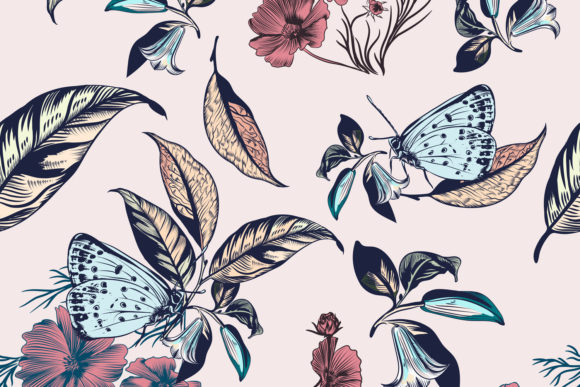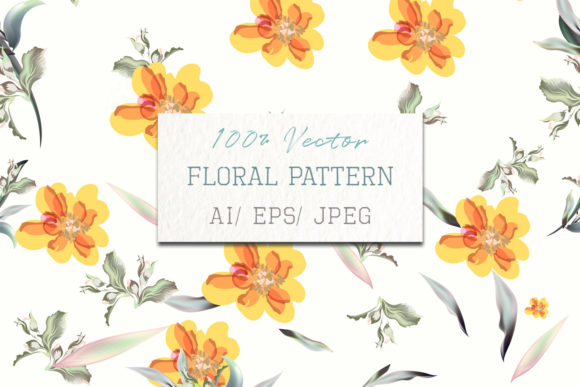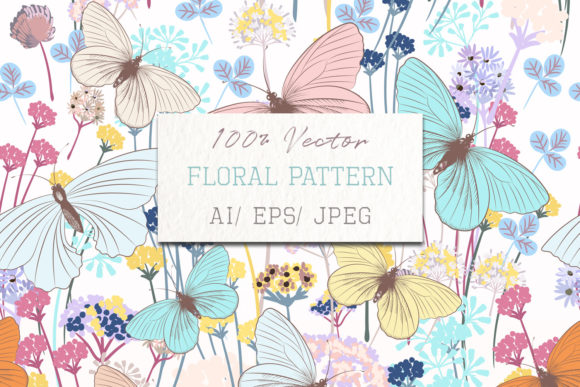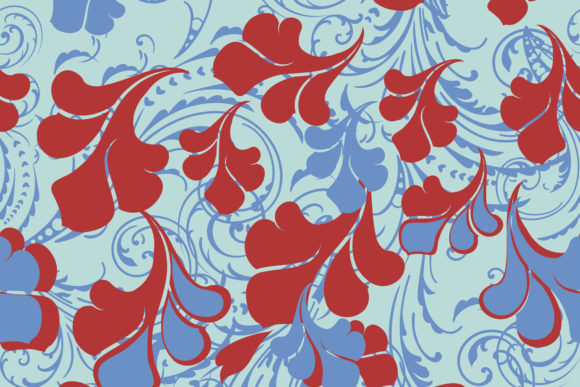
Evaluating Floral Pattern Vector Vintage Elegance for Professional Design Projects
When sourcing assets for high-end packaging, textile printing, or digital branding, the distinction between raster and vector formats often dictates the longevity and versatility of a project. The concept of Floral Pattern Vector Vintage Elegance represents a specific intersection in design resources: it combines the organic, imperfect charm of traditional hand-drawn botanical illustration with the mathematical precision of vector geometry. For designers and art directors aged 20 to 50 who are accustomed to evaluating digital assets, understanding this hybrid nature is essential. Unlike standard clip art, these resources aim to preserve the soul of analog art while providing the technical utility required for modern commercial production.
This specific collection, comprising 100 distinct vector art pieces, offers a comprehensive library rather than a single isolated graphic. The primary value proposition here is infinite scaling without degradation. However, beyond mere resolution, the decision to utilize this style over others involves weighing aesthetic authenticity against technical flexibility. When comparing options in the vintage floral category, professionals must assess whether the asset truly retains hand-drawn characteristics or if it has been overly sanitized by automated tracing tools. True vintage elegance in vector form requires a delicate balance where anchor points enhance rather than stiffen the original artistic intent.
Vector Versus Raster: Assessing Technical Tradeoffs
The most immediate comparison when selecting floral patterns is between vector-based files and high-resolution raster images. While a 5000x5000 px JPEG preview is included with this package for visualization and mood boarding, the core deliverables are the AiCS2 and EPS10 files. Understanding why these specific formats matter is crucial for workflow efficiency.
- Infinite Scalability: Raster images, even at 5000 pixels, have a hard ceiling. Scaling up for a billboard or large-format wall mural will eventually reveal pixelation. Vector versions allow you to scale from a business card to a building wrap while preserving the beautiful hand-drawn characteristics. This makes them inherently more future-proof for multi-channel campaigns.
- Editability and Color Control: A significant limitation of raster vintage patterns is the difficulty in altering color palettes. With vectors, every petal, leaf, and stem is an editable path. If a client’s brand guidelines shift from sepia tones to vibrant teals, the adjustment takes minutes rather than hours of masking and hue shifting in Photoshop.
- File Size Efficiency: Complex raster textures can result in massive file sizes that slow down layout software. Vector files describing 100 floral elements are typically lightweight, keeping InDesign or Illustrator projects responsive even when multiple patterns are applied across various artboards.
However, vectors do have tradeoffs. They cannot replicate the complex, chaotic noise of real paper grain or watercolor bleeding as naturally as a high-res scan. If your project demands hyper-realistic texture where the medium itself is the message, a pure raster approach might be superior. Yet, for clean, reproducible commercial design where consistency is key, the vector format remains the industry standard.
Aesthetic Authenticity in Digital Reproduction
Not all vintage-style vectors are created equal. A common pitfall in this market segment is the "auto-trace" look, where organic lines become jagged or unnaturally smooth. When evaluating Floral Pattern Vector Vintage Elegance, one must look for evidence of manual refinement. The description notes that creating this illustration was a work of joy, suggesting a level of human curation that automated scripts lack.
Authentic vintage elegance relies on specific visual cues: variable line weight, asymmetrical balance, and intentional imperfections. In a vector environment, these must be deliberately constructed. When comparing this 100-piece set against generic alternatives, consider the following evaluation criteria:
- Line Quality: Do the curves flow naturally, or do they exhibit the polygonal stiffness of low-quality conversion? High-quality vintage vectors maintain the fluidity of ink on paper.
- Composition Variety: A set of 100 should offer genuine diversity—borders, corners, full repeats, and standalone motifs. Many competing products pad their numbers with minor variations of the same three flowers. A robust library supports cohesive yet varied application across a product line.
- Stylistic Consistency: Even with variety, the collection should feel like it belongs to the same era and artist's hand. Disjointed styles within a single pack can make professional layouts appear haphazard.
If the goal is to evoke a specific historical period or artisanal quality, verify that the vector paths respect those conventions. Modern geometric simplification may be trendy, but it contradicts the promise of vintage elegance.
Format Compatibility and Workflow Integration
Technical specifications directly impact team collaboration and vendor compatibility. This package includes specific file types that cater to different stages of the production pipeline. Evaluating whether these match your ecosystem is a practical necessity before purchase.
EPS10: This is the universal exchange format. It ensures backward compatibility with older systems and forward compatibility with newer ones. Print shops, sign makers, and embroidery digitizers almost universally prefer EPS10 because it strips away software-specific bloat while retaining accurate path data. If you plan to send these patterns to third-party vendors, this format is non-negotiable.
AiCS2: Adobe Illustrator CS2 (version 12) is a legacy format choice. While modern AI users can open it without issue, this specific version is often selected to maximize compatibility with older installations still found in some print production environments or educational institutions. It strikes a balance between feature support and accessibility. However, users relying exclusively on non-Adobe vector tools like Affinity Designer or CorelDRAW should test import fidelity, as legacy AI formats sometimes translate gradients or complex brushes differently than native files.
JPEG Preview (5000x5000 px): While not for final production, this high-resolution raster serves a vital role in the selection process. It allows stakeholders to approve designs without needing vector software installed. It also functions as a fallback for web-only applications where SVG or EPS isn't supported. Note that mockups are not included in the download; this keeps the file size lean and avoids licensing complications, but it means you must visualize the pattern in context yourself.
Decision Factors: When This Resource Fits Best
Determining whether Floral Pattern Vector Vintage Elegance is the right investment requires honest assessment of project needs. This resource excels in specific scenarios but may be unnecessary in others.
Ideal Use Cases:
- Custom Packaging Design: Where die-lines change frequently and patterns must adapt to various box sizes without losing quality.
- Textile and Surface Pattern Design: Where seamless repeats and colorway variations are standard requirements.
- Branding Systems: When a heritage or artisanal look is needed but must remain consistent across digital, print, and environmental touchpoints.
- Stationery Suites: Wedding invitations, letterheads, and certificates where scaling between envelope flaps and poster-sized signage is required.
When to Consider Alternatives:
- Photorealistic Textures: If the brief specifically calls for visible canvas weave, paint splatter, or photographic depth, seek high-resolution raster scans instead.
- One-Off Web Graphics: For a single blog header or social post that will never be printed, a 5000px JPEG may suffice, making the vector premium unnecessary.
- Strictly Modern/Minimalist Briefs: Vintage elegance implies ornamentation. If the design direction is flat, geometric, or futuristic, this aesthetic will clash regardless of technical quality.
Making an Informed Selection
Ultimately, choosing design resources is about risk mitigation and creative enablement. The inclusion of both AiCS2 and EPS10 formats demonstrates an awareness of professional production realities, reducing the likelihood of file corruption or incompatibility downstream. The commitment to preserving hand-drawn characteristics addresses the aesthetic concerns that often deter designers from using vector vintage assets.
As you evaluate this against other options, prioritize long-term utility over short-term convenience. A slightly higher initial effort to integrate editable vectors pays dividends when revisions inevitably occur. Remember that support is available; if you need assistance or have any questions about implementation, reaching out to the creator can clarify technical nuances that spec sheets cannot capture. Thank you and happy creating. By focusing on both the tangible deliverables and the intangible qualities of craftsmanship, you ensure that your chosen assets serve not just the current project, but your broader design practice.