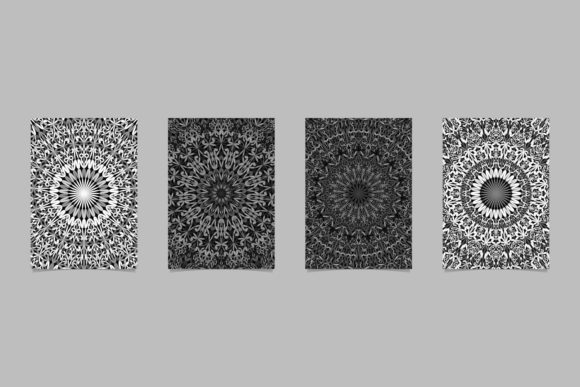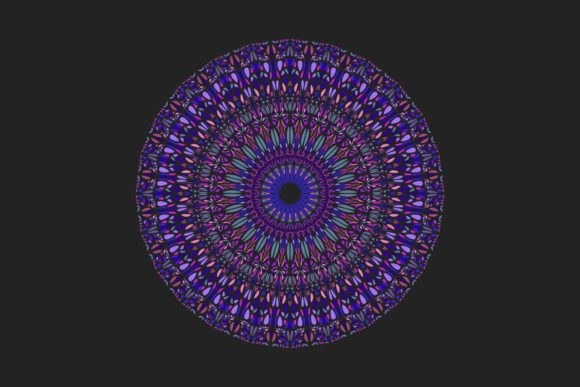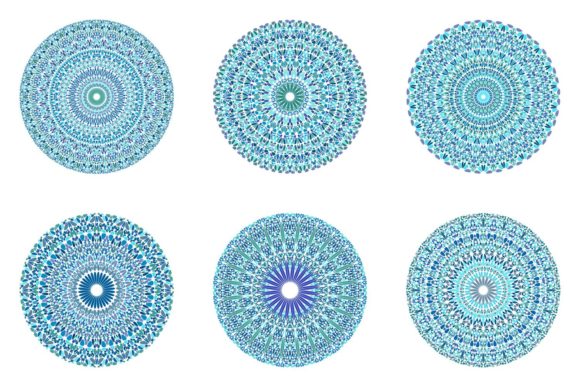
Evaluating the Floral Mandala Design Set for Professional Creative Projects
Selecting the right digital assets is a critical step in professional graphic design, particularly when working with intricate ornamental styles. The Floral Mandala Design Set, featuring circular round flower patterns and geometrical abstract vector elements, represents a specific category of decorative resources that bridge traditional artistry with modern technical requirements. For designers, illustrators, and print specialists, understanding the practical utility of this asset pack involves more than assessing its aesthetic appeal; it requires an evaluation of technical specifications, workflow integration, and project suitability. This analysis explores the functional aspects of the set, which includes high-resolution JPG files at 7500x5000 pixels alongside editable Vector EPS and AI formats, to help creative professionals determine if it aligns with their current production needs.
Defining the Asset Composition and Technical Utility
The Floral Mandala Design Set is fundamentally a hybrid resource package. It combines raster imagery with scalable vector graphics, addressing two distinct phases of the design process. The inclusion of JPG files at 7500x5000 resolution indicates a focus on large-format readiness. At standard print resolutions of 300 DPI, these dimensions allow for output sizes up to approximately 25 x 16 inches without interpolation. This makes the raster component suitable for immediate use in digital mockups, web backgrounds, or medium-sized print collateral where vector editing is unnecessary.
However, the core value for professional adaptation lies in the Vector EPS and AI files. Unlike raster images, these formats define the mandala geometry through mathematical paths rather than pixel grids. This distinction is vital for users who need to modify line weights, alter color palettes, or isolate specific floral elements. The "geometrical abstract" description suggests a structured symmetry common in mandala art, but the vector format allows this rigidity to be deconstructed. Designers can separate individual petals, adjust spacing, or combine multiple mandalas into complex composite borders. When evaluating this set, the primary consideration should be whether your workflow demands this level of malleability or if static high-resolution imagery suffices.
Strategic Applications and Workflow Integration
Interest in circular round flower pattern mandala sets typically stems from specific industry requirements where ornamental density conveys value or tradition. Evaluating this asset set requires mapping its characteristics to tangible use cases. In packaging design, particularly for cosmetics, tea, or spiritual wellness products, these vectors serve as foundational branding elements. The ability to scale the AI/EPS files ensures that intricate details remain crisp on both small labels and large shipping boxes. Similarly, in textile and surface pattern design, the seamless nature of geometric mandalas allows for efficient tiling and repetition, reducing the manual labor required to create continuous prints.
For event stationery and wedding invitations, the set offers a balance of elegance and efficiency. Creating bespoke mandalas from scratch is time-prohibitive for most commercial projects. This set provides a professional baseline that can be customized to match specific brand colors or thematic elements. However, users must assess the complexity of the provided vectors. Highly detailed mandalas with thousands of anchor points can cause performance lag in software like Adobe Illustrator or CorelDRAW. Before committing to this asset for a deadline-driven project, it is advisable to test the file’s responsiveness within your specific hardware environment to ensure that the geometric abstraction does not impede rendering speeds during export or proofing.
Benefits and Operational Advantages
The primary benefit of acquiring a comprehensive set rather than individual elements is stylistic consistency. When designing a suite of materials—such as a business card, letterhead, and website header—using assets from the same Floral Mandala Design Set ensures uniform stroke widths and curvature logic. This visual coherence is difficult to achieve when sourcing disparate free resources. Furthermore, the dual-format delivery mitigates risk. If a client approves a concept based on the 7500x5000 JPG mockup but later requests a billboard-sized adaptation, the designer can revert to the EPS source without needing to redraw the artwork or purchase additional licenses.
- Scalability: Vector formats eliminate pixelation concerns for large-format printing and merchandise.
- Editability: AI and EPS files allow for color separation, essential for screen printing and spot-color offset jobs.
- Time Efficiency: Pre-constructed geometric symmetry reduces hours of manual pen-tool work.
- Versatility: Abstract elements can function as standalone icons, background textures, or border frames.
Tradeoffs and Critical Considerations
Despite the advantages, there are inherent tradeoffs to using pre-made mandala sets. The most significant is the potential for generic aesthetics. Because floral mandalas are popular in stock libraries, there is a risk of visual overlap with competitors. To mitigate this, evaluators should consider the set as raw material rather than a finished product. The expectation should be that significant customization is required to make the design proprietary. Additionally, the learning curve for manipulating complex vector mandalas should not be underestimated. Users unfamiliar with pathfinder tools, clipping masks, or gradient meshes may find the AI files overwhelming compared to the plug-and-play simplicity of the JPGs.
Licensing is another critical evaluation metric. Professionals must verify whether the license covers commercial end-products, especially for items intended for resale like t-shirts or mugs. Some sets restrict usage to digital-only or limit the number of physical impressions. Always cross-reference the specific terms of the Floral Mandala Design Set against your project’s distribution scope to avoid legal complications.
Determining Fit: When to Choose This Set vs. Alternatives
This Floral Mandala Design Set is likely a strong fit for projects requiring a fusion of organic floral motifs and precise geometric structure. If your brief calls for "boho chic," "spiritual luxury," or "traditional ornamentation," and you possess intermediate-to-advanced vector editing skills, this asset offers high ROI. It is particularly effective when you need a cohesive visual language across multiple touchpoints and require the safety net of high-resolution raster backups for quick approvals.
Conversely, alternatives may be worth considering in specific scenarios. If your project requires hyper-realistic botanical illustration rather than stylized abstraction, a hand-drawn brush set or watercolor scan would be superior. If you need absolute exclusivity and have the budget, commissioning a custom illustrator eliminates the risk of stock recognition entirely. Furthermore, if your output is strictly digital and low-resolution (e.g., social media avatars or app icons), the full vector/high-res package may be overkill; a lighter, web-optimized PNG set might offer better performance and lower cost. Finally, for users who lack vector software entirely, the AI/EPS components of this set will be inaccessible, rendering half of its value obsolete. In such cases, seeking a purely raster-based alternative with transparent backgrounds would be a more practical decision.
Making an Informed Selection
Ultimately, the decision to utilize this Floral Mandala Design Set should be driven by technical compatibility and project scope rather than visual preference alone. Evaluate the anchor point count in the preview files to gauge editability. Confirm that the 7500x5000 JPG resolution meets your largest anticipated print dimension. Assess whether the geometric abstract style aligns with your brand’s long-term identity or if it is merely a temporary trend. By treating this asset pack as a production tool with specific capabilities and limitations, designers can effectively leverage its versatility while avoiding common pitfalls associated with ornamental vector art. The goal is to integrate these circular flower patterns seamlessly into a professional workflow, ensuring they enhance rather than dictate the final creative outcome.