Evaluating Four Floral Mandala Page Backgrounds for Design Projects
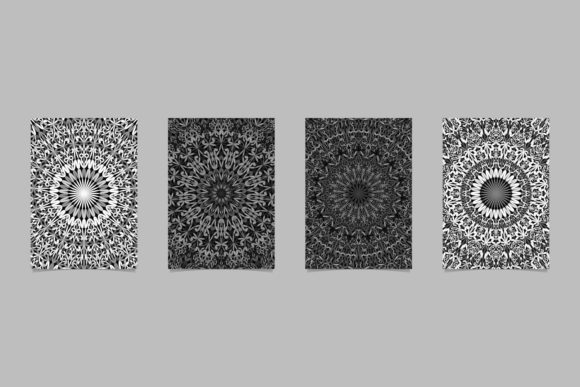
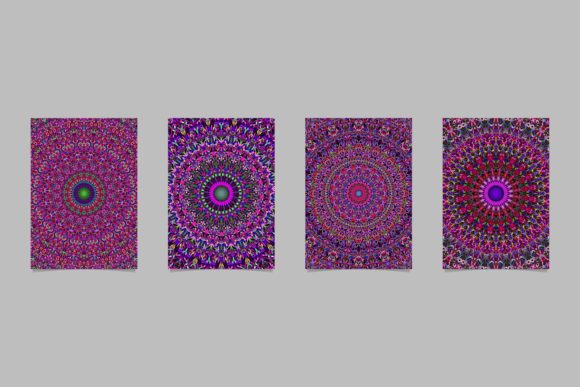
Selecting the right visual foundation for stationery, brochures, or digital layouts requires balancing aesthetic appeal with technical functionality. The Four Floral Mandala Page Backgrounds and colorful abstract botanical kaleidoscope mandala brochure background set represents a specific category of oriental vector stationery template designs. For designers, marketers, and content creators evaluating this asset, understanding its technical specifications, stylistic applications, and practical limitations is essential before integration into a workflow. This evaluation focuses on how these assets perform in real-world scenarios rather than simply describing their visual characteristics.
Defining the Asset and Technical Specifications
The core value proposition of this design set lies in its dual-format delivery and high-resolution specifications. Users receive files in both JPG (12000x4000 pixels) and vector EPS formats. This distinction is critical for evaluation. The JPG format provides immediate usability for web-based projects, digital presentations, or large-format printing where rasterization is acceptable. The 12000x4000 pixel dimension suggests a panoramic aspect ratio, specifically engineered for tri-fold brochures, wide banners, or multi-page spreads rather than standard A4 or letter-sized documents.
Conversely, the EPS vector format offers scalability without quality loss. For professionals assessing this product, the vector file is the primary deliverable for print production. It allows for color manipulation, element isolation, and resizing to fit custom dimensions. When evaluating Four Floral Mandala Page Backgrounds, one must verify that their software environment supports EPS editing. Without access to Adobe Illustrator, CorelDRAW, or compatible open-source alternatives like Inkscape, the utility of the vector component diminishes significantly, leaving the user reliant solely on the static JPG.
Stylistic Alignment and Audience Resonance
The aesthetic profile combines floral motifs with geometric mandala structures, categorized under "oriental" and "botanical kaleidoscope" styles. This specific fusion targets niche markets. Evaluators should consider whether this visual language aligns with their target demographic. Mandala and oriental patterns often convey mindfulness, tradition, organic wellness, or cultural heritage. They are frequently utilized in yoga studio branding, holistic health brochures, tea packaging, and spiritual event stationery.
However, the "colorful abstract" descriptor introduces a variable that requires careful assessment. Highly saturated, complex kaleidoscope backgrounds can compete with foreground text. Unlike minimalist negative-space designs, these patterns demand rigorous typography testing. If the intended application involves dense informational copy, the evaluator must determine if sufficient contrast exists or if the design requires overlay adjustments. The decision to use this set should hinge on whether the brand identity benefits from ornate complexity or requires cleaner, more corporate restraint.
Benefits of Integrated Vector Stationery Templates
- Production Efficiency: Pre-designed mandala backgrounds eliminate hours of illustration time. For agencies handling multiple stationery projects, this accelerates turnaround times while maintaining professional detail levels that are difficult to achieve quickly with generative AI.
- Resolution Versatility: The 12000px width ensures that even when cropped for smaller formats like business cards or social media headers, the remaining image retains adequate DPI for sharp printing.
- Customization Potential: Vector EPS files allow designers to recolor elements to match specific Pantone or CMYK brand guidelines, transforming a generic stock asset into proprietary branded collateral.
- Cohesive System Design: Receiving four distinct but related backgrounds enables the creation of a unified stationery suite where envelopes, letterheads, and brochures share a consistent visual thread without appearing repetitive.
Tradeoffs and Practical Considerations
No design asset is universally optimal. Evaluating Four Floral Mandala Page Backgrounds requires acknowledging inherent tradeoffs. The panoramic 3:1 aspect ratio of the JPG is specialized. While excellent for brochures, it necessitates significant cropping or tiling for portrait-oriented documents like flyers or certificates. This cropping process may remove key focal points of the mandala symmetry, requiring manual reconstruction in the vector file to maintain balance.
Additionally, the complexity of botanical kaleidoscope vectors can impact performance. Files with thousands of anchor points may cause lag in older hardware or RIP (Raster Image Processor) systems during commercial printing. Designers working in high-volume production environments should test file weight against their output capabilities. There is also the consideration of licensing and exclusivity. As a template design, similar visuals may appear in other users' work. For brands requiring unique intellectual property, this asset serves as a starting point rather than a final solution.
Situational Fit Analysis
Determining whether this asset aligns with project goals involves matching specific use cases to the design’s strengths. The following scenarios highlight where this set typically delivers strong ROI versus where alternatives are preferable.
Strong Fit Scenarios:
- Wellness and Cultural Events: Retreat brochures, meditation app splash screens, or festival signage benefit directly from the mandala symbolism and organic color palettes.
- Packaging Design: The wide format translates exceptionally well to box wraps, sleeve labels, or shopping bag prints where continuous pattern flow is desired.
- Budget-Conscious Branding: Small businesses needing professional stationery without commissioning custom illustration can leverage these templates to achieve a bespoke look at a fraction of the cost.
Alternative Consideration Scenarios:
- Corporate Financial Reporting: The ornate nature of floral mandalas may undermine perceptions of analytical rigor. Solid colors or subtle geometric textures are often safer choices.
- Text-Heavy Educational Materials: If readability is the primary metric, the visual noise of a kaleidoscope background increases cognitive load. Alternatives with designated whitespace zones are superior.
- Tech and SaaS Interfaces: Unless the brand specifically bridges technology and tradition, organic mandala patterns may create dissonance with modern UI expectations.
Decision-Making Framework for Buyers
Before acquiring the Four Floral Mandala Page Backgrounds set, evaluators should run through a practical checklist. First, audit current and upcoming project dimensions against the 12000x4000 specification. If more than 50% of intended uses require portrait orientation, calculate the additional labor needed to reformat the vector files. Second, conduct a legibility test. Place sample body text over the most complex area of the preview image. If readability drops below acceptable standards, factor in the time required to create gradient masks or solid overlays.
Third, assess long-term versatility. Will the color palette remain relevant across seasons, or will it require frequent recoloring? Vector files mitigate this risk, but only if the team possesses the skill to execute modifications efficiently. Finally, compare against project timelines. If immediate deployment is necessary and the team lacks vector editing expertise, the JPG version must suffice as-is. In such cases, ensure the fixed composition meets layout requirements without modification.
Ultimately, this design set offers substantial value for specific creative contexts. Its high resolution and vector flexibility make it a robust tool for print and digital stationery. However, its specialized aspect ratio and ornate aesthetic demand intentional application. By objectively weighing these factors against project parameters, designers and stakeholders can make informed decisions that balance artistic vision with operational reality. The goal is not merely to acquire a beautiful background, but to secure a functional asset that enhances communication effectiveness while respecting production constraints.