Elevating Valentine’s Day Design: The Strategic Value of Pink and White Floral Frames
In the competitive landscape of seasonal marketing and digital content creation, visual assets are no longer mere decorations; they are strategic tools that drive engagement, convey brand sentiment, and streamline production workflows. Among the most enduring yet evolving assets in this space is the Floral Frame, for Happy Valentine Card. Specifically, the vector illustration featuring pink and white florals isolated on a cute pink background has emerged as a staple for professionals ranging from freelance designers to enterprise marketing teams. This specific aesthetic is not simply a nod to tradition; it represents a convergence of consumer psychology, technical efficiency, and modern design trends that prioritize versatility without sacrificing emotional resonance.
Defining the Asset: More Than Just Decoration
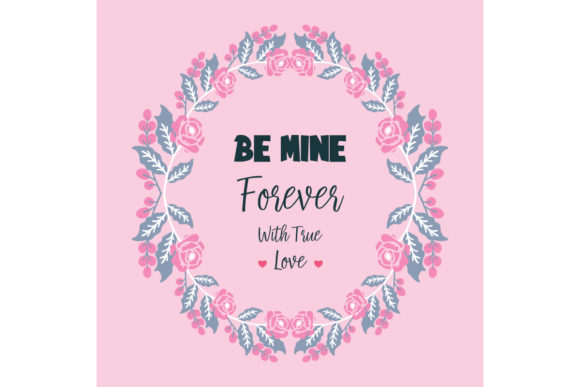
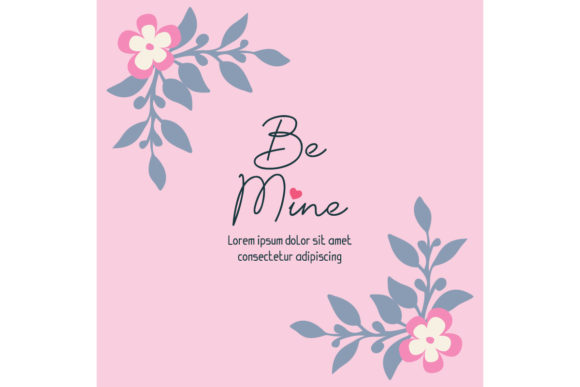
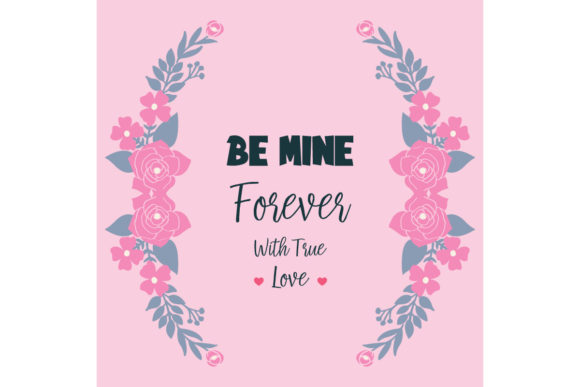
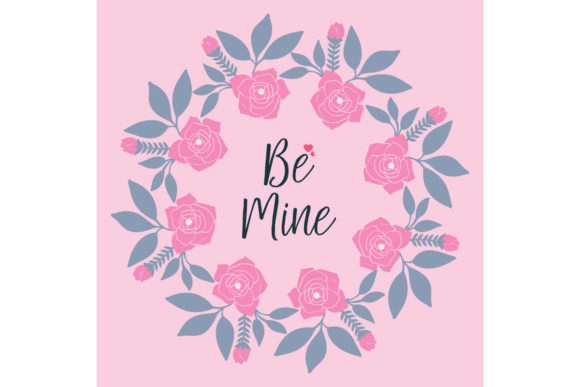
To understand the utility of this asset, one must first define it through a professional lens. A Floral Frame, for Happy Valentine Card is a pre-designed graphical border composed of botanical elements—typically roses, peonies, or cherry blossoms—arranged to create negative space in the center for typography or imagery. When specified as a "vector illustration," it transcends standard raster graphics. Unlike JPEGs or PNGs with fixed resolutions, vector formats (such as AI, EPS, or SVG) utilize mathematical paths to define shapes. This means the pink and white floral elements can be scaled infinitely, from a small social media icon to a massive retail banner, without any loss of fidelity or pixelation.
The specific color palette of pink and white isolated on a matching pink background serves a dual purpose. Aesthetically, it adheres to the soft, romantic coding associated with Valentine’s Day while avoiding the aggressive saturation of pure red, which can sometimes feel dated or overly intense. Technically, the isolation on a solid color background facilitates rapid editing. Designers can easily select the background layer to remove or replace it, allowing the floral frame to integrate seamlessly into diverse brand guidelines. This balance of thematic appropriateness and technical adaptability is what makes this specific variation of the Floral Frame, for Happy Valentine Card a high-value asset in creative libraries.
Alignment with Broader Creative and Market Trends
The sustained popularity of this design element correlates directly with several macro-trends in the creative industry and consumer market. We are currently witnessing a shift toward "soft minimalism" and "digital comfort." After years of bold, high-contrast brutalist design dominating digital spaces, there is a measurable consumer preference for warmer, more organic visuals. The pink and white floral motif satisfies this craving for gentleness and nostalgia, acting as a visual anchor in an otherwise chaotic digital feed.
Furthermore, the rise of the creator economy and the democratization of design tools have altered how businesses approach seasonal campaigns. Small business owners, Etsy sellers, and independent marketers often lack the budget for bespoke illustration commissions for every micro-campaign. High-quality vector frames bridge this gap. They offer the polish of custom art with the accessibility of stock assets. This aligns with the broader trend of "modular design," where creators build reusable asset libraries to maintain consistency across platforms while reducing turnaround time. The Floral Frame, for Happy Valentine Card functions as a modular component that can be repurposed across email headers, Instagram stories, product packaging, and printed collateral, ensuring brand cohesion during a high-volume sales period.
Why Professionals Are Prioritizing Vector Florals
The attention paid to this specific asset type is driven by changing workflow expectations. In an era of agile marketing, speed is paramount. The traditional workflow of sketching, inking, coloring, and digitizing a floral border is resource-intensive. By utilizing a pre-made vector illustration, professionals reclaim hours of production time. However, the value proposition extends beyond mere speed. Vectors allow for non-destructive editing. A marketer can adjust the hue of the pink petals to match a specific Pantone brand color or rearrange individual flower clusters to fit an unconventional aspect ratio. This level of customization ensures that the Floral Frame, for Happy Valentine Card does not look generic, even when sourced from a library.
Additionally, the technical requirements of modern multi-channel marketing demand scalable assets. A campaign might require a square format for LinkedIn, a vertical format for TikTok, and a wide format for a website hero section. Rasterized floral frames often fail in this cross-platform translation, becoming blurry or cropping awkwardly. Vector illustrations solve this responsiveness challenge inherently. For entrepreneurs and freelancers managing multiple client accounts simultaneously, this technical resilience reduces revision cycles and ensures professional output regardless of the final medium.
Practical Applications and Strategic Implementation
Understanding the theory behind the asset is essential, but practical application drives ROI. Here is how forward-thinking creators are leveraging the pink and white floral vector frame in current workflows:
- E-Commerce Product Photography Overlays: Brands are using these frames as digital overlays on product shots to create themed listing images without physically staging flowers for every SKU. The transparency and scalability of vectors make this seamless.
- Email Marketing Segmentation: Marketers are adapting the frame’s density based on audience segments. A VIP segment might receive a lush, full-frame design, while a re-engagement email uses a subtler, cropped version to avoid visual clutter.
- Print-on-Demand Customization: Freelancers use the vector paths to create cut files for Cricut or Silhouette machines, turning a digital frame into physical stickers, cake toppers, or greeting cards.
- Social Media Templates: Agencies build master templates where the floral frame acts as a consistent branding element, with only the central text changing for daily posts throughout February.
These applications demonstrate that the Floral Frame, for Happy Valentine Card is not a static image but a dynamic design system. The key to successful implementation lies in treating the frame as a foundational layer rather than an afterthought. By integrating it early in the design process, professionals ensure that typography and layout complement the organic curves of the illustration, rather than competing with them.
Navigating Licensing and Authenticity
As reliance on pre-made assets grows, so does the need for ethical and legal diligence. Professionals must distinguish between personal-use licenses and commercial extended licenses. Using a Floral Frame, for Happy Valentine Card in a client project or for merchandise resale typically requires specific permissions. Beyond legality, there is the issue of authenticity. Consumers are increasingly adept at recognizing overused stock assets. To mitigate this, experts recommend modifying the vector source file. Changing the color grading, adding texture overlays, or combining multiple frame elements creates a unique derivative work that retains the efficiency of stock while delivering the exclusivity of custom design.
This practice also future-proofs the asset. As AI-generated imagery becomes more prevalent, human-curated and modified vector art retains a distinct value proposition: editability and intentionality. AI can generate a floral image, but it cannot currently provide clean, layered vector paths suitable for professional print production or precise brand color matching. Therefore, the hand-drawn or digitally illustrated vector frame remains a superior choice for technical commercial applications.
The Future of Seasonal Design Assets
Looking forward, the role of assets like the pink and white floral frame will likely expand rather than diminish. As augmented reality (AR) and interactive web experiences become standard for holiday campaigns, vector assets serve as the lightweight foundation for these technologies. A 2D floral frame can be extruded into 3D space or animated via CSS for web interactions without heavy file sizes. The demand for assets that are both aesthetically pleasing and technically performant will continue to shape the market.
For professionals, creators, and marketers, mastering the use of the Floral Frame, for Happy Valentine Card is about more than celebrating a holiday. It is an exercise in efficient, empathetic design. It acknowledges the consumer's desire for warmth and connection while respecting the business imperative for scalability and speed. By selecting high-quality vector illustrations and applying them with strategic intent, creatives can deliver Valentine’s Day campaigns that are not only visually beautiful but also commercially effective and operationally sustainable. In a digital ecosystem that moves relentlessly fast, these timeless floral motifs provide a necessary moment of pause, beauty, and professional excellence.